
Marshall County Court Records After Arrest
The Marshall County court records after arrest pathway is separate from the jail booking record. The basic sequence is arrest, booking at the jail, prosecutor review, filed charge, and then a case entry in Indiana MyCase or in the court that maintains the record. The Marshall County Jail roster can show the booking side, including the person's name, sex, arrest date, mugshot, cell block, hold reason, bond text, and held-for agency when those fields are returned. That roster is useful, but it is not the final word on formal charges.
For the court side, the prosecutor decides what to file after reviewing reports and probable-cause material. The court record then controls the filed charge, hearing schedule, bond orders, plea, dismissal, conviction, sentence, and later post-judgment entries. Use Marshall County jail inmate records when the question is current custody or booking detail. Use Marshall County jail roster mugshots when the question is a booking photo. Use MyCase, the clerk, or the court when the question is the filed criminal case.
Case path: Arrest at the street level leads to booking, then prosecutor filing, then the court record that tracks the charge.
Find Marshall County Court Records
The Indiana Judicial Branch Marshall County courts page points users to MyCase and says official records of proceedings must be obtained from the court that keeps the record. Marshall County is in Judicial District 5 with Elkhart and Kosciusko counties. MyCase is the public starting point for many criminal case records, but the clerk or the specific court remains the source for certified copies, complete files, and records not shown online.
The Indiana Judicial Branch Marshall County courts page is a useful source before using the case-search portal.
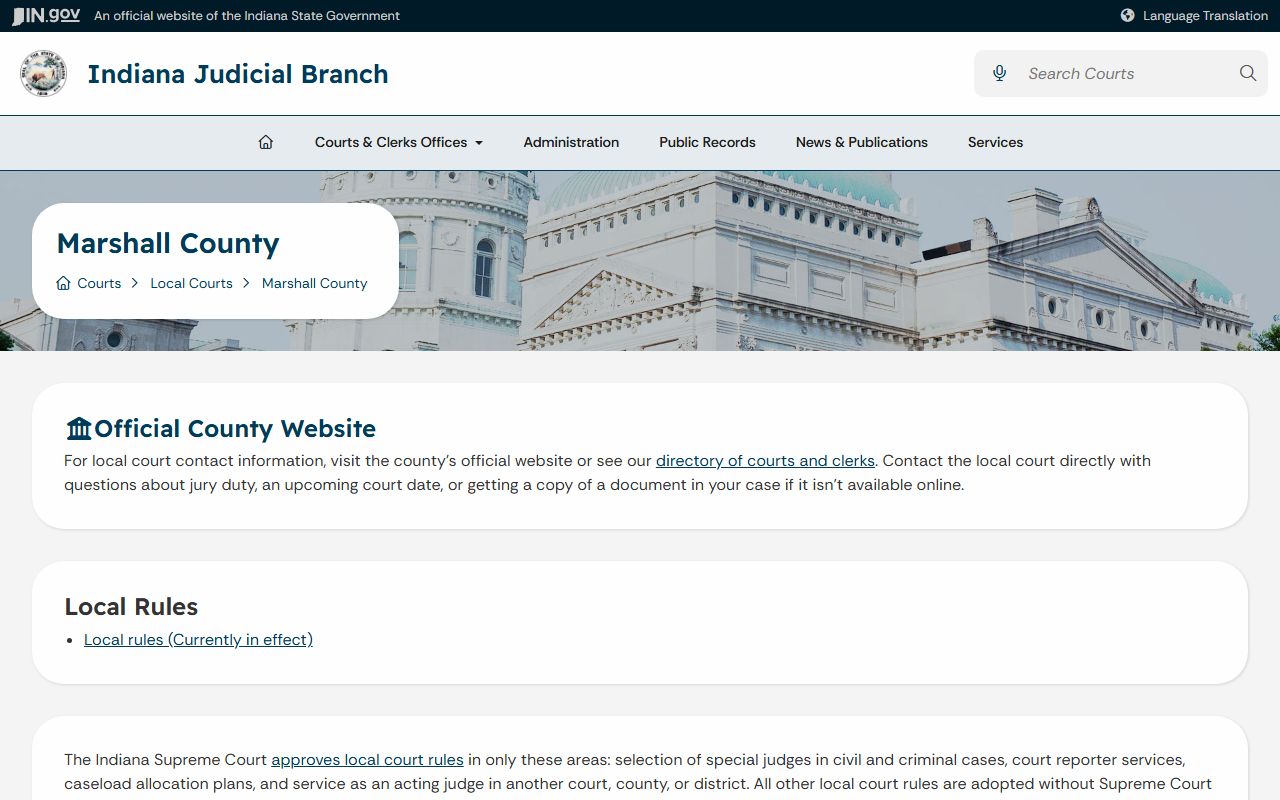
That court source connects the local courts, MyCase, e-filing, court statistics, local rules, and district information in one place.
Start with the person's full name, then narrow by Marshall County if the name is common. If the booking record has a case number or court note, search that exact number first. A new arrest may not appear as a filed case right away because booking can occur before the prosecutor files the charging document. If MyCase has no match, check the jail roster for custody status, then contact the clerk or the court after allowing time for filing.
| MyCase Field | Type | Required | Use in Marshall County |
|---|---|---|---|
| Search type | Tabs or options | Yes | Case, name, attorney, and citation-style options may render by portal version. |
| Name | Text | Depends on search type | Use defendant last and first name. Add county or dates for common names. |
| Case number | Text | Depends on search type | Best when a roster note, court notice, or clerk record gives the exact number. |
| Court or county | Filter | No | Select Marshall County to avoid results from other Indiana counties. |
| Filed date range | Date filter | No | Helpful when the arrest date is known but the name returns too many cases. |
The public Indiana MyCase search portal is the main court-record lookup point for filed cases.
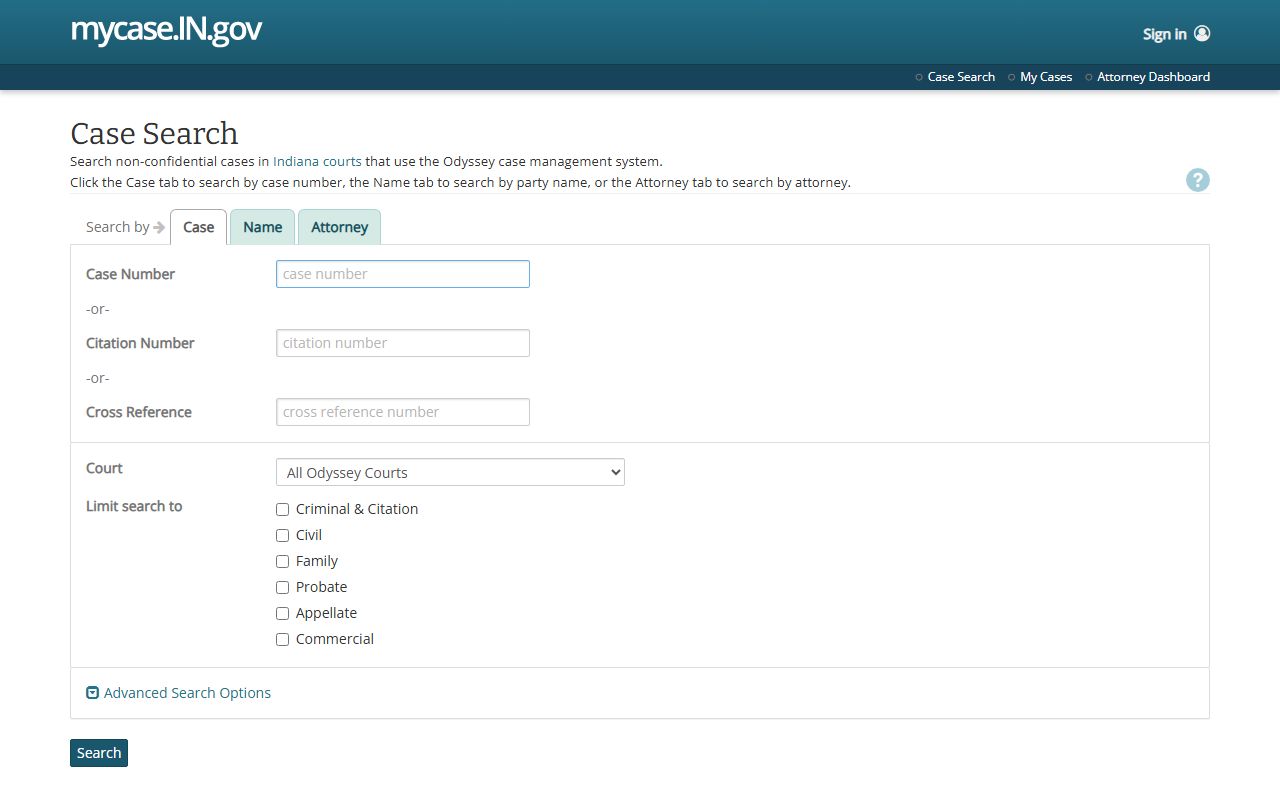
MyCase can show the public case index and some documents, while the court that maintains the file controls official records.
Marshall County Arrest Charging Records
Charging documents explain why a court case exists after a Marshall County jail arrest. The jail roster may show probable-cause or hold language before the filed case is complete. The prosecutor may file fewer charges than the booking entry showed, add charges, amend a level, or choose a different charge based on the report. Indiana research for Marshall County identifies complaint, information, and indictment as the key charging-document paths to explain for this page.
| Document | Who Uses It | What It Does | What to Check |
|---|---|---|---|
| Complaint | Officer or prosecutor | Starts a criminal accusation in court after arrest review. | Read the listed charge, date, probable-cause references, and bond entry. |
| Information | Prosecutor | Sets out the formal charge the prosecutor files without grand-jury indictment. | Compare it with any booking charge shown on the jail roster. |
| Indictment | Grand jury | Starts or supports charges in cases where that process is used. | Look for case level, count number, and later amended filings. |
A filed charge is an accusation, not a finding of guilt. The court record must be read through the later entries because charges can be amended, dismissed, merged, or resolved by plea or trial. If the court docket conflicts with the jail hold text, rely on the court for formal charge status and call the jail for current custody or release questions.
Marshall County Charge Status Records
Charge status is the part of the court record that tells whether an accusation is still active, changed, dismissed, or resolved. In Marshall County, roster hold text can include multiple "New Charge" lines, bond status, no-bond notes, court-set bond language, or serving-time notes. Those entries help explain why a person is in custody, but the case docket is where the filed charge status should be checked after the prosecutor acts.
| Status | Plain Meaning | Why It Matters After Arrest |
|---|---|---|
| Pending | The charge has not reached final disposition. | Hearings, bond orders, plea dates, and trial settings may still change. |
| Amended or reduced | The prosecutor or court record changed the original charge or level. | The filed court charge may differ from the booking charge shown by the jail. |
| Dismissed | The charge is no longer being pursued in that case. | The arrest may still appear in some records unless sealed or expunged by law. |
| Convicted | A guilty plea or finding resulted in judgment. | Sentencing, probation, jail time, or transfer to IDOC may follow. |
| No bond or hold | Release is blocked or not set for that entry. | Another warrant, sentence, probation/parole hold, ICE hold, or agency detainer may keep the person in custody. |
Bond After Marshall County Arrest
Bond is a release issue, not proof that the court case is over. The Marshall County sheriff FAQ gives several local bond-money channels: the automated kiosk in the sheriff department lobby, mailed money order, GTL ConnectNetwork online, and the commissary provider website. The sheriff's critical note is that money placed for bond through the trust-account method must go to the inmate's Trust Account, not the Prepay Account. Fees may apply for card or vendor payments.
The roster sample in the research showed bond labels such as Cash Only, Cash Only with an amount, No Bond, Set By Judge, and some zero-dollar values tied to charge entries. "Set By Judge" means the jail record may reflect a court order rather than a simple jail release schedule. Indiana still allows commercial bail agents, so a surety bond may be relevant if the court permits it. Paying one listed bond may not release the person if another no-bond hold, sentence, warrant, probation/parole hold, ICE hold, or other-agency detainer remains.
| Bond Situation | What It Means | Where to Confirm |
|---|---|---|
| Cash only | The court or jail requires cash for the listed bond. | Jail/warrant line and MyCase bond order. |
| Set by judge | A judge controls the bond decision or amount. | MyCase docket and court clerk. |
| Surety bond | A commercial bail agent may post bond if allowed. | Court order and Indiana bail agent rules. |
| No bond | Release is not available on that entry at that time. | Court order, jail, or holding agency. |
Note: Bond can change after hearings, so verify court orders and jail custody status before sending money.
Marshall County Arrest Warrant Records
Warrants can be the reason a jail arrest occurs, but Marshall County research did not confirm a separate live public active-warrant list on the sheriff website. The sheriff contact page routes warrant information through the same non-emergency number, (574) 936-3187, press 2 for Jail & Warrant Information. The CentralSquare portal bundle has a warrants route and API service, but the inspected warrant configuration returned race and sex options with a null page configuration, so it should not be described as a confirmed active public warrant search.
MyCase may show warrant entries, failures to appear, or recalled warrants after the court record exists. Older court warrant records may require the clerk or the court. Some unserved warrant or investigatory material can be withheld under Indiana public-access rules. Once a warrant is served, the arrest may produce a jail roster entry, and the court case can show what happened next.
- Arrest warrant
- A court order that directs law enforcement to arrest a person.
- Bench warrant
- A court-issued warrant, often tied to failure to appear or a violation.
- Search warrant
- A warrant for a search. It is not a jail custody record by itself.
- Other-agency warrant
- A hold or warrant from another jurisdiction that can affect release.
Marshall County Charge vs Conviction
A charge and a conviction are not the same record event. A person can be arrested and charged, then later have the case dismissed, amended, reduced, or resolved without a conviction on the original count. The difference matters when reading Marshall County court records after arrest because a booking charge may sound final even when it is only the first accusation in the case path.
| Point of Comparison | Charge | Conviction |
|---|---|---|
| Stage | Accusation filed or listed after arrest. | Judgment after plea, verdict, or finding. |
| Proof level | Based on probable cause or charging review. | Requires guilty plea or proof beyond a reasonable doubt. |
| Record effect | May appear in jail, court, and police records. | Can affect sentencing, probation, custody, and criminal history. |
| Best source | MyCase, clerk, prosecutor filing, and jail hold text. | Final court disposition and sentencing entry. |
Sealed or Expunged Court Records
Indiana access law allows public inspection of many records, but it also creates limits. Juvenile records, confidential court categories, investigatory records, and sealed or expunged records may be unavailable to the general public. Indiana expungement is governed by IC 35-38-9. A person seeking to limit access to an eligible arrest, dismissal, conviction, or related court record must use the court process that applies to that record.
| Point of Comparison | Sealed | Expunged |
|---|---|---|
| Public visibility | Hidden or restricted from normal public access. | Access is limited under Indiana expungement rules. |
| Source of change | Court order, rule, statute, or confidential record category. | Court order under Indiana's expungement chapter. |
| Law enforcement access | May still exist for limited official use. | May remain available for uses allowed by law. |
| What to do | Ask the clerk or court about the record's access status. | Review IC 35-38-9 and seek legal advice if needed. |
Sealing or expungement does not mean every old online copy vanishes at once. It does mean the court record access status should be checked at the source before relying on a search result.
Marshall County Court Record Contacts
Use the office that owns the record. The jail handles booking and custody records. The prosecutor files formal charges. The clerk and courts maintain case records, dockets, and official proceedings. The Marshall County Clerk records division is the local contact for many court-record questions.
The Marshall County Clerk records division page is the best source image for court-record contact details.
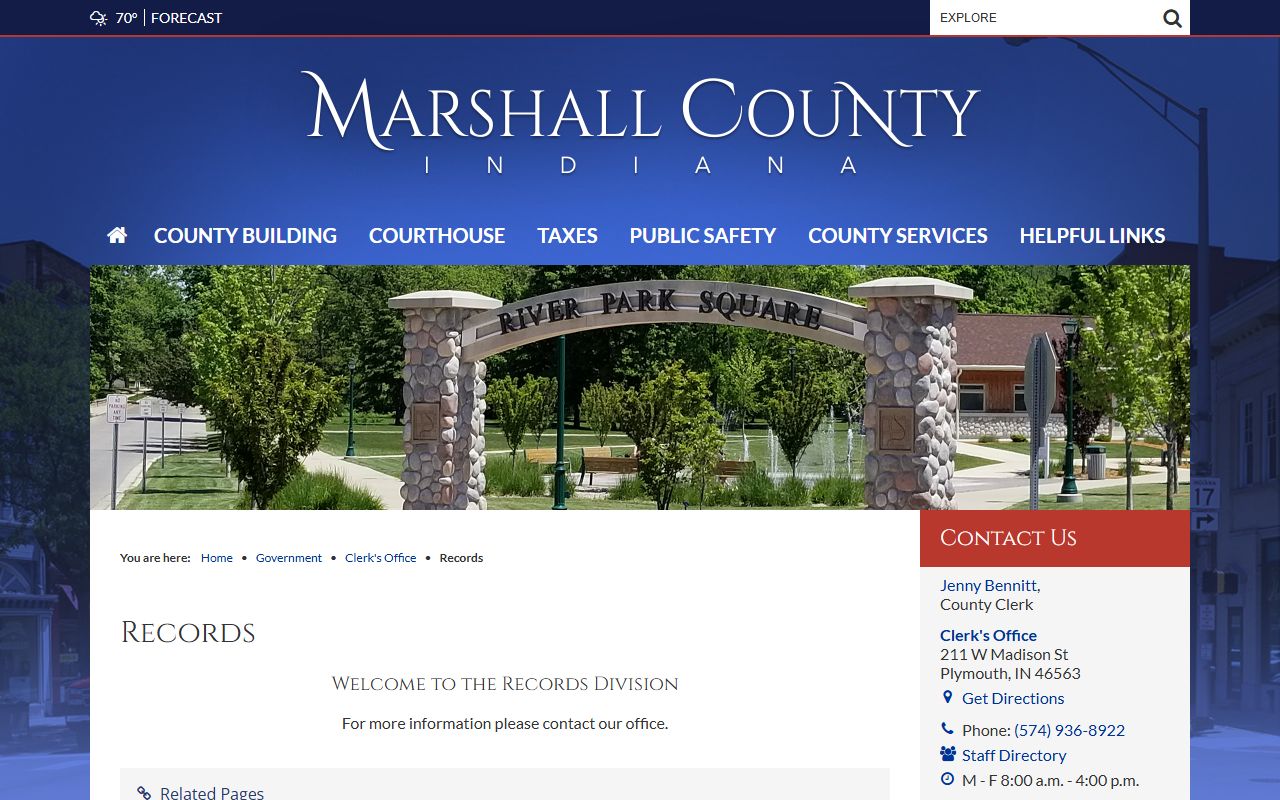
When MyCase does not show the full record, the clerk or the court that keeps the file can explain copy access and official-record steps.
Circuit Court
501 N Center St, Suite 301
Plymouth, IN 46563
(574) 935-8780
M-F 8:00 a.m.-4:00 p.m.; lunch closure 12:00-1:00
Superior Courts
211 W Madison St
Plymouth, IN 46563
No. 1: (574) 935-8740; No. 2: (574) 935-8763
Use the assigned court shown in the case record.
Clerk's Office
211 W Madison St
Plymouth, IN 46563
(574) 936-8922
M-F 8:00 a.m.-4:00 p.m.
Prosecutor's Office
112 W Jefferson St
Plymouth, IN 46563
(574) 935-8666
M-F 8:00 a.m.-4:00 p.m.
Indiana Access Rules for Court Records
Indiana's Access to Public Records Act, or APRA, supplies the general inspection and copying right for public records unless a law or exception applies. The key APRA source for Marshall County arrest and booking access is IC 5-14-3. IC 5-14-3-3 gives the general right to inspect and copy public records. IC 5-14-3-4 lists records that must or may be withheld, including confidential records and discretionary investigatory records. IC 5-14-3-5 requires certain law-enforcement daily log and arrest information to be made available.
Court records also have court-specific access rules. Indiana Rules on Access to Court Records, Rule 5 identifies exclusions and confidential categories. 240 IAC 6 deals with criminal history record information collection, release, and review. For jail operations and reporting context, 210 IAC 3 covers county jail standards, and the Indiana Criminal Justice Institute death-in-custody reporting page explains quarterly reporting for reportable in-custody deaths.
Important: Court and jail lookup results are not consumer reports and should not be used for FCRA-covered screening decisions.
Note: If a record is missing online, it may be too new, restricted, sealed, held by another office, or not yet filed in court.